A dependable light for the everyday carry

Power, Protection,
and Precision—Engineered to Keep You Safe Anywhere.

A practical flashlight belongs where the day can change without warning: on the walk home, beside the travel bag, or ready for a task after dark. Start with useful light, then learn exactly what this one can—and cannot—do.

FIELD EQUIPMENT / EVERYDAY LIGHT / 01
Useful light, carried with purposeWet-weather awarenessPreparedness begins with practiceCheck the details before relying on it
01 / Purposeful by design

Darkness is a condition. Not a plan.

Good preparation is rarely dramatic. It is the small decision to keep a useful light where you can find it, to know how it works before you need it, and to check its limits instead of guessing. A flashlight can make a familiar path easier to read, help you locate a dropped key, or give you a clearer view of a roadside task. That is the straightforward value of carrying one.

This model presents a compact, dark-bodied flashlight with a prominent circular control, several blue indicator lights, a ridged section near the head, and a textured grip. The supplied product imagery also places it in wet outdoor settings. Those visuals suggest an object intended to be carried and handled, but a photograph is not a test report. Actual brightness, beam pattern, runtime, water resistance, impact resistance, materials, and operating instructions must be confirmed with the seller.

We take that distinction seriously. “Defense” is part of the product name, not a substitute for judgment, training, or a promise that any device will prevent harm. A flashlight is most useful when it helps you observe, orient yourself, and make a calmer next decision. Its everyday purpose is illumination and preparedness—not confrontation.

Use it responsibly. Keep the beam directed away from drivers and other people’s eyes. Follow local rules for carrying and use, and never rely on an unverified product feature in a safety-critical situation.
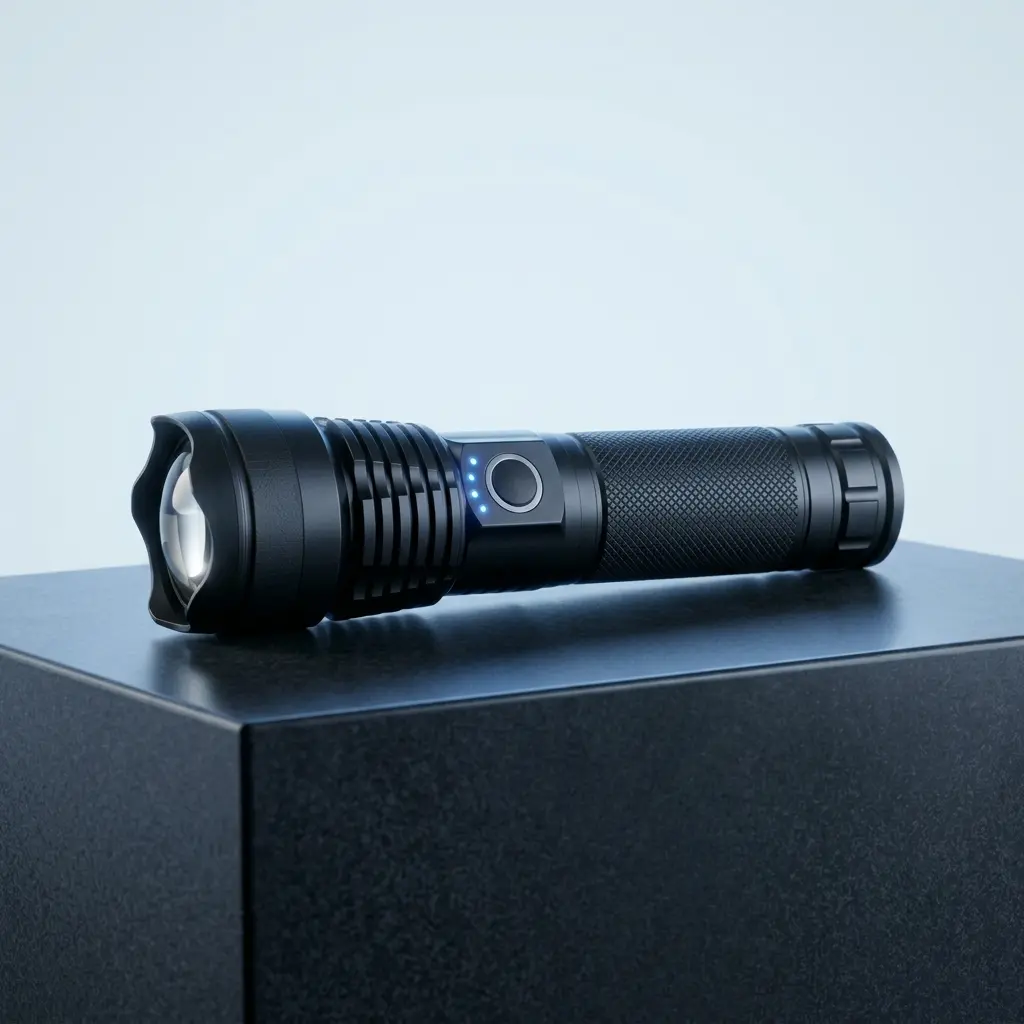
Black flashlight shown in profile with its round control and blue indicator lights
Form / grip / control

A tool you can understand at a glance.

The clean product view makes the form easy to inspect. The flashlight has a broad head, a long cylindrical body, visible grip texture, and a round control framed by small blue lights. These visible details may help you recognize the control area and hold the body securely, but they do not tell us how the control behaves, what the indicators mean, or how the light is powered.

Before carrying it routinely, ask the seller for the current operating guide. Confirm how to turn it on and off, whether it has multiple modes, what a press or hold does, and whether the blue lights communicate battery status or something else. Practice the actual controls in a familiar, well-lit place. Simple familiarity can matter more than a feature list when you need to find the switch without fumbling.

Visible controlA round button is shown on the body. Confirm its exact functions.
Textured formRibbing and patterned grip surfaces are visible in the photos.
Blue indicatorsIndicator lights appear beside the button; their meaning is unverified.
02 / Everyday, not exceptional

Make the ordinary easier to see.

On a walk after sunset, a light can help you notice uneven ground, read a gate or address, or find the edge of a path. On a commute, it can be useful when looking through a bag or checking a dim stairwell. At home, it can help locate a breaker panel or illuminate a cupboard during an outage. These are common, grounded jobs: seeing what is already there and moving with more awareness.

Choose the beam level and direction with care. Start by lighting the ground a few steps ahead, then adjust only as needed. Avoid shining into traffic, windows, or another person’s face. In shared spaces, a lower output—if the product provides one—may be less disruptive. Do not assume that it does: check the controls and available modes with the seller, and learn how to select them before use.

A carried light also needs a consistent home. Decide whether it belongs in a coat pocket, a bag compartment, or a designated spot by the door. Check that it is present before leaving, and make sure it cannot switch on accidentally while packed. If it uses replaceable or rechargeable power, follow the manufacturer’s instructions for charging, storage, and replacement. Do not leave a battery-powered item unattended while charging unless its instructions say that is appropriate.

Build a simple readiness check
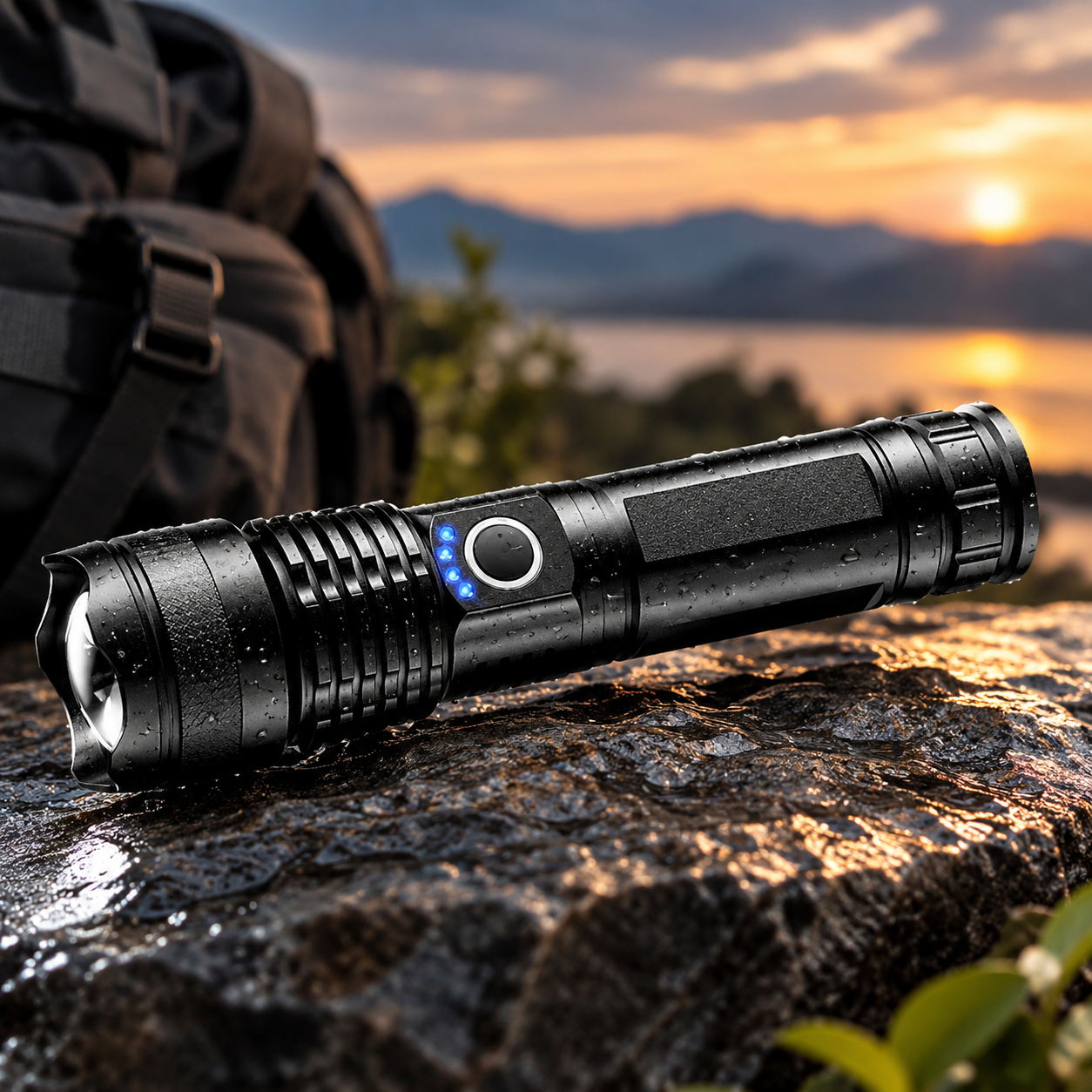
Flashlight with visible blue indicators on rain-wet stone beside an outdoor pack at sunset
Carry thoughtfully01 / Outdoor light
03 / A practical carry routine

Preparedness is a habit.

A dependable routine is specific, repeatable, and based on the product’s real instructions. Use these notes to make a new light part of a sensible everyday kit.

NOTE 01 / BEFORE LEAVING

Know where it is

Choose one consistent place and return the flashlight there after every use. A light buried under loose items is less useful than one you can reach without unpacking. Check that it is present before an evening walk or trip, and keep it separate from objects that could press the control in transit.

NOTE 02 / LEARN THE CONTROLS

Practice in daylight

Identify the on/off action, available settings, and any lockout procedure from the supplied instructions. Test the controls in a familiar area, not while navigating stairs or traffic. If the blue indicators have a status meaning, learn the seller’s explanation rather than assigning them one from appearance alone.

NOTE 03 / AFTER EXPOSURE

Inspect, then store

If the flashlight gets wet, follow the manufacturer’s care guidance. Wipe it only as directed, check for visible damage, and avoid opening compartments with wet hands or in a wet environment unless the instructions allow it. A photo showing water on a product does not establish its tested water-resistance level.

NOTE 04 / BETWEEN USES

Keep readiness honest

Use the maker’s recommended schedule for checking charge or batteries. Store it within the stated temperature range, away from children, and where you can reach it without creating a hazard. If it behaves unexpectedly, stop using it and consult the instructions or seller before depending on it again.

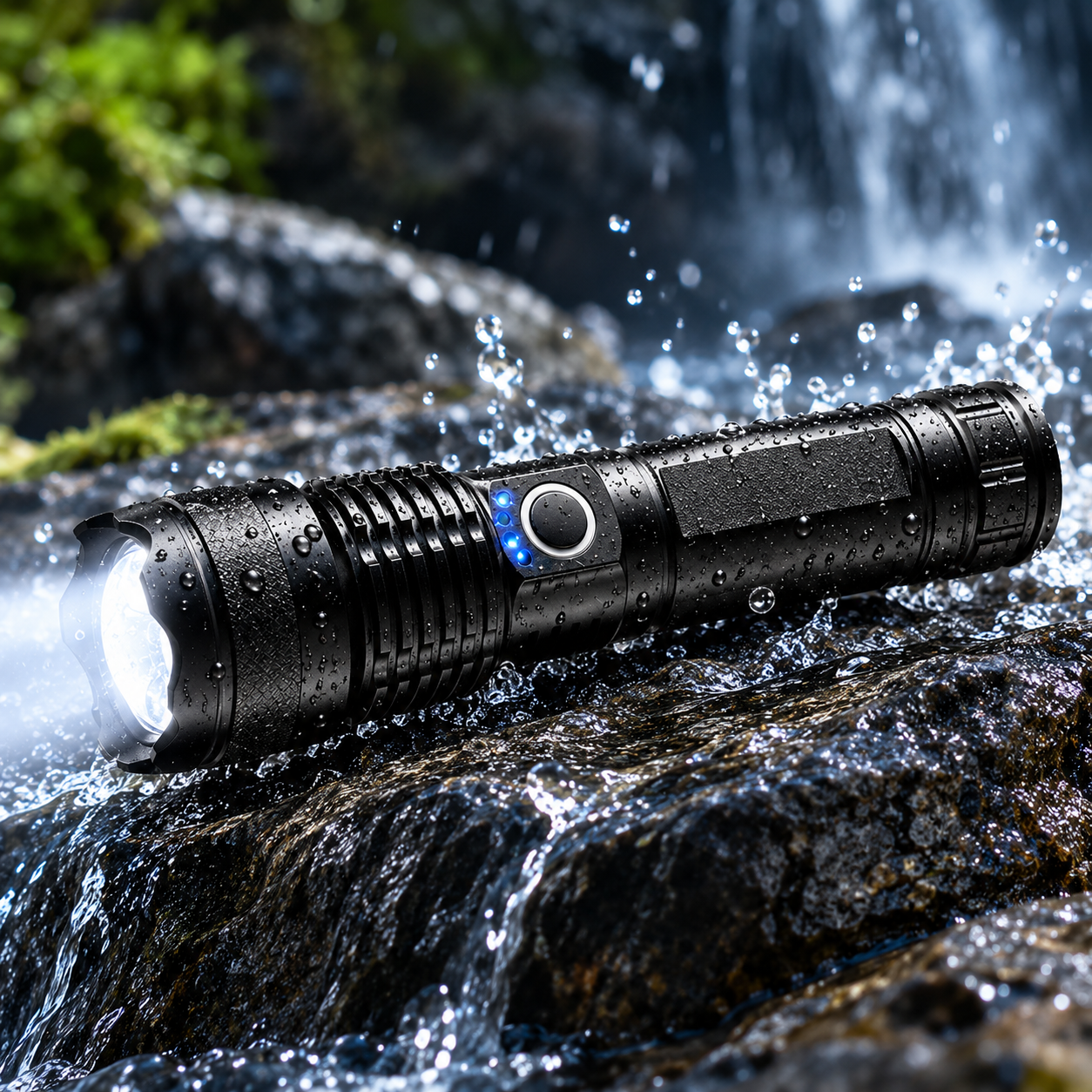
Flashlight shown wet beside flowing water and dark rocks
Wet setting shown in product imagery02 / Verify limits
04 / Weather-aware, never careless

Rain changes the task. Keep your footing first.

The product imagery shows droplets and flowing water around the flashlight. That makes a useful visual cue, but it cannot establish a formal water-resistance rating or tell us whether the light is intended for heavy rain, splashes, immersion, or only a damp environment. Those are different conditions. Ask for the specific rating and the test standard, if any, before exposing the product to water.

On a wet walk, the light can help reveal slick patches, puddles, and obstacles, but it cannot make a surface safe. Slow down, use a handrail where available, and keep one hand free when the route calls for it. If visibility is poor, choose a safer path or wait. Illumination supports judgment; it does not replace it.

After outdoor use, look for damage, moisture near seams, or unusual behavior, and follow the official care instructions. Do not open a wet device or charge it while wet unless the maker explicitly directs that. If the product’s limits are unclear, treat them conservatively and keep it dry.

05 / Travel and outdoor tasks

A small piece of a bigger plan.

Travel brings unfamiliar routes, unfamiliar rooms, and moments when the main lighting is not where you need it. A personal flashlight may be useful for locating luggage, checking a dark corner, or making a short walk between a vehicle and a destination more legible. Keep it accessible rather than packed at the bottom of a suitcase, and review transport rules for batteries and carry-on items before departing.

For outdoor tasks, consider the whole setup: weather, terrain, communication, route, and the time you expect to return. Carry a separate backup light when the activity makes loss of illumination consequential. A product photo cannot tell you whether this flashlight’s beam reaches far enough, stays bright long enough, or remains comfortable to hold for your particular task. Verify those details through reliable seller information and your own appropriate testing.

Set expectations before relying on a new tool. Try it on a familiar route, at the times and distances you expect to use it. Notice whether the beam is broad or focused, how easily you can operate it, and how long it serves your needs. Record what you learn, and choose a different light if it does not fit the task. Preparation is not loyalty to a product; it is making a sound choice.

Flashlight product view showing the main body, grip texture, round button, and blue indicators
Form and controls03 / Learn before use
A short plan for the moments that matter

Light helps. A plan leads.

Preparedness is broader than equipment. Use a flashlight to support good decisions, while keeping the rest of your plan in view.

WALK / COMMUTE

Choose visibility over speed

When a route is poorly lit, pause somewhere safe and orient yourself before moving. Use the beam to check the immediate path, then keep it pointed down and ahead rather than sweeping it across people or traffic. If the route feels unsafe, a flashlight is not a reason to continue. Turn back, change course, contact someone you trust, or seek a well-lit public place.

TRAVEL / TRANSIT

Keep it reachable, not loose

Place the flashlight in a known compartment where you can retrieve it without emptying your bag. Avoid storing it where a button may be pressed by other items. Before a flight or other regulated journey, verify current carrier rules for the flashlight and any battery; requirements can depend on battery type and where it is packed. Follow the carrier’s instructions rather than relying on a general assumption.

HOME / OUTAGE

Make a little light go further

During a power interruption, use a flashlight to move carefully, locate essential items, or check a familiar area. Keep emergency contacts and a backup lighting option as part of the household plan. Avoid using a bright beam continuously when it is not needed, and do not leave the flashlight where someone could trip over it. If the outage creates a hazard, follow local emergency guidance.

OUTDOOR TASKS

Carry a second way to see

For a longer walk, roadside task, or unfamiliar outdoor activity, decide what you will do if your main light is lost, depleted, or damaged. A separate backup, spare power prepared according to the manual, and a charged phone can reduce dependence on a single device. Share your route or expected return when appropriate. Choose equipment for the conditions you will actually encounter.

06 / Questions worth asking

Clarity is part of being prepared.

The supplied images communicate appearance and setting, not verified performance. Before purchase or use, get the details that determine whether this flashlight suits your intended routine. If the seller cannot answer a safety-relevant question clearly, do not fill the gap with assumptions.

01

What are the actual light specifications?

Request measured brightness, beam distance and pattern, available modes, and any conditions behind those figures. Confirm whether numbers describe peak output or sustained use.

02

What is the expected runtime and power source?

Confirm battery type, whether it is included, charging method, typical and low-mode runtime, replacement availability, and storage guidance. Do not infer a battery status function from the blue indicators.

03

What does “waterproof” mean for this product?

Ask for the precise water-resistance rating and test information. Confirm permitted exposure and care after rain. Do not infer immersion capability from wet product imagery.

04

What materials, dimensions, and mass are documented?

Request the product’s verified measurements and material description, and decide whether its size and weight suit your pocket, bag, or kit. Appearance alone cannot confirm construction claims.

05

What safety, warranty, and local-use information applies?

Read the official manual and seller terms. Ask about operating cautions, charging requirements, return process, and applicable local carrying rules. Treat advertised “defense” language as a name, not a guaranteed outcome.

07 / Make the light yours

Carry less uncertainty.

A useful everyday light is one you can locate, operate, maintain, and trust within known limits. The flashlight pictured here has a distinct dark finish, ridged head, textured body, round control, and blue indicator lights. Its outdoor imagery gives it a capable visual character. The responsible next step is still the same: confirm the seller’s specifications, read the instructions, test it appropriately, and decide whether it meets your real needs.

For walks, commutes, travel, and outdoor chores, keep illumination in perspective. It can help you see a route and make a more informed choice. It is not a substitute for a safe route, a charged phone, appropriate clothing, sound planning, or professional help. Carry it as one modest, practical part of a broader preparedness routine.

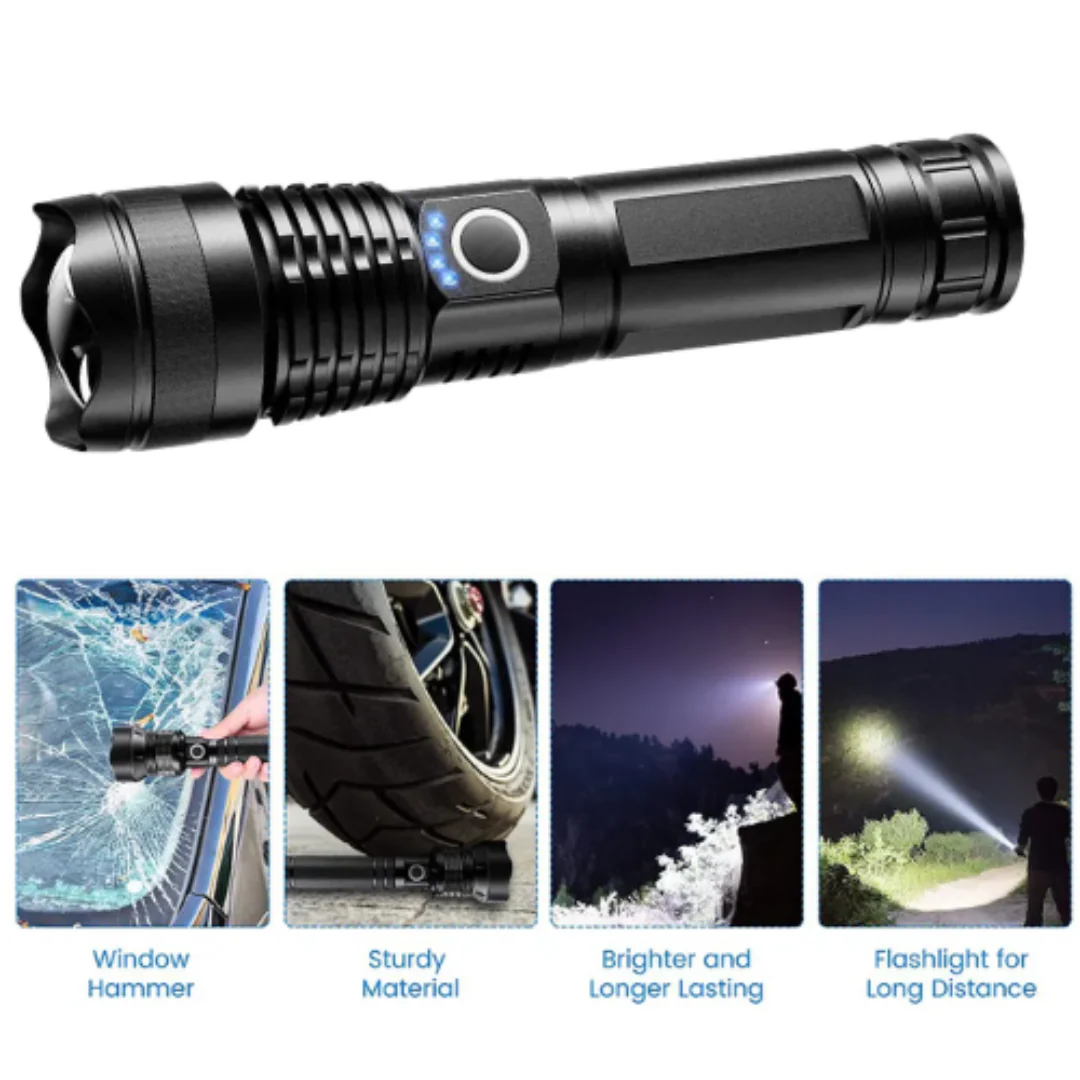
Product reference image featuring the flashlight and four illustrative usage scenes

Reference image supplied for the product. Specific claims shown in embedded artwork are not verified here; confirm features with the seller.

Review the product details and seller guidance before relying on any feature.Visit Defense Flashlight